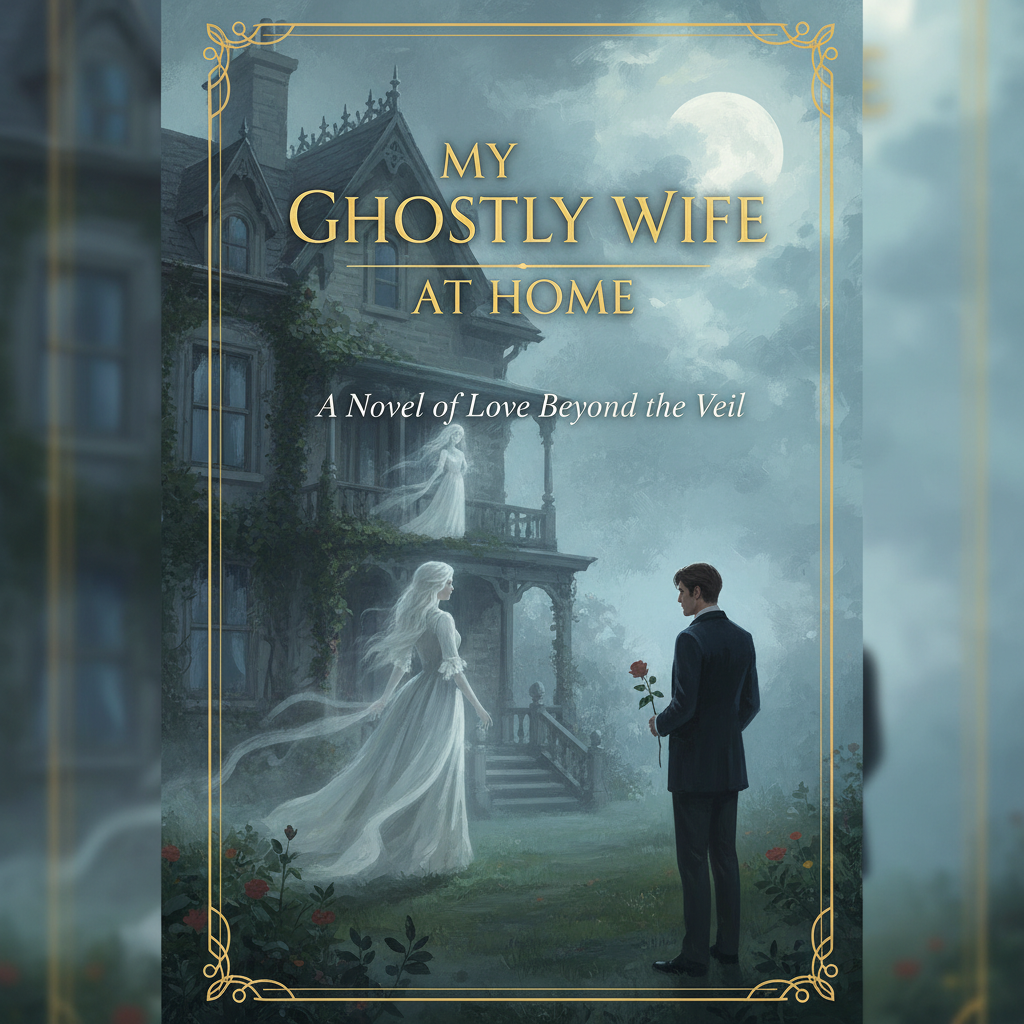
My Ghostly Wife at Home
I am a matchmaker for ghost marriages, arranging unions for others with spirits of the departed. Yet by a twist of fate, a female ghost ended up in my own home as my bride. At first, she tormented me in countless ways, but eventually, she became gentle and obedient. Sometimes, a ghostly bride can be more tender than any living woman.
My Ghostly Wife at Home
The practice of ghost marriages is seen by some as superstition, by others as a remnant of feudal tradition. But to those of us in the trade, it is an act of virtue and kindness.
Usually, when a person dies, they are interred in the ancestral tomb. Yet some are not permitted entry—those who died unnatural deaths, children whose lives were cut short, and those who passed unmarried. Their souls carry grievances, denied peace in both life and death, and may well stir up trouble among the living.
Our task is to find suitable matches for these lonely remains, to bury them together, offering comfort to their wandering spirits and removing their resentments, ensuring tranquility for their families. This is what is known as a ghost marriage.
When I was five, my father left my mother and me behind to travel the world. My mother and I sought refuge with my second uncle. He was a “Walker,” a profession once closely related to the old coroner’s trade, later branching out into its own line. People call us “Walkers”; outsiders, out of respect, address us as “Master Daoist,” although in truth we have nothing to do with Daoism.
Years passed, and my mother and I survived on the money my second uncle earned arranging ghost marriages. It wasn’t a way to get rich, but it kept us comfortable enough. At first, I disliked the trade, but as it was passed down through my family, I had little choice but to continue.
One day, my second uncle told me he was going to spend six days in a coffin to purge evil energy, fasting and isolating himself inside, and asked me to l
📚 Related Recommendations
View More >