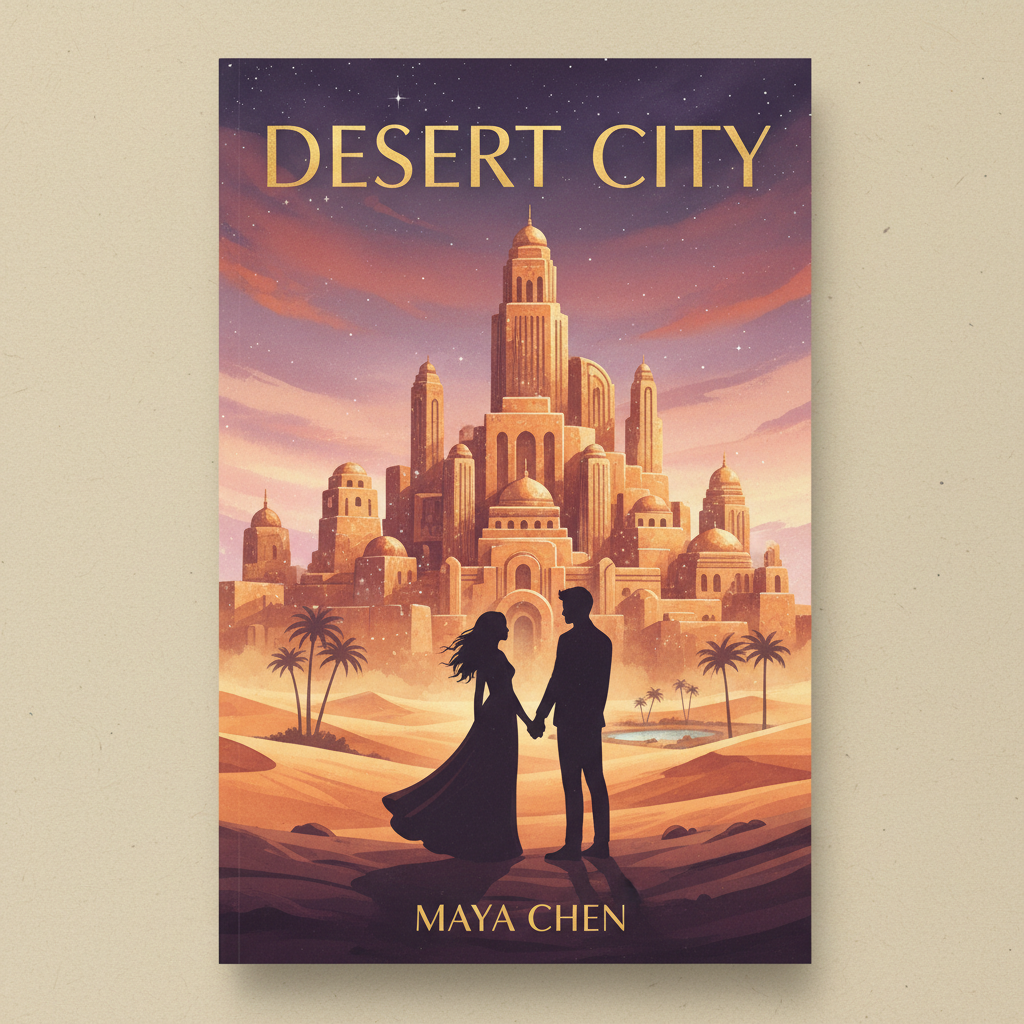
Desert City
Desert City
There was, in fact, no yellow sand in Huangsha Town. Decades ago, it had been an ordinary southern riverside village, with a T-shaped canal slicing through its heart: on the west bank lived the Huang family, and on the east, the Sha family, hence the name Huangsha Village. Owing to its location at the confluence of canals, people gradually gathered, and the place grew into a bustling little town.
Huang Qi was one among the several hundred Huangs in town. For a long time in her childhood, she believed the town’s name came from the endless parade of barges carrying cement and sand that stopped here to unload, leaving great mounds of yellow sand on the riverbanks—paradise for children. She was also convinced that beyond the town lay even more yellow sand, like the boundless deserts in the film "New Dragon Gate Inn"—an endless horizon of wilderness, so cool and majestic.
Her greatest joy was to drape her mother’s scarf as a cape, brandish a short sword she’d whittled from a plank, and, leading her gang of wild children, capture the riverbank “hilltops.” She’d point her wooden sword at her rivals and declare, “I am the Lord of Huangsha City! From now on, this is my territory. If you want to hang around here, pay tribute!”
The losers would present their treasures—usually rubber bands or glass marbles. Sometimes, a group of rascals would mischievously push someone forward, winking and grinning, “Great Lord, we offer you a beauty as your bandit bride!”
The child they pushed forward was Sha Zhouyin, the best-looking boy in town. At the sight of h
📚 Related Recommendations
View More >